A Decade to Decade Approach in Men's Fitness
Discover Our Categories
LOOKING FOR SOMETHING?
READ MORE ABOUT


Introduction
We must accept growing older as a part of life, yet there are things we can do to better prepare ourselves for these changes. My research taught me that there are common changes that occur in each decade of a man’s life and the ways to mitigate the effects while keeping the body in peak condition. For each 10 year span, there are problems, solutions & a proactive approach recommended to have the best experience with the aging process.
20's
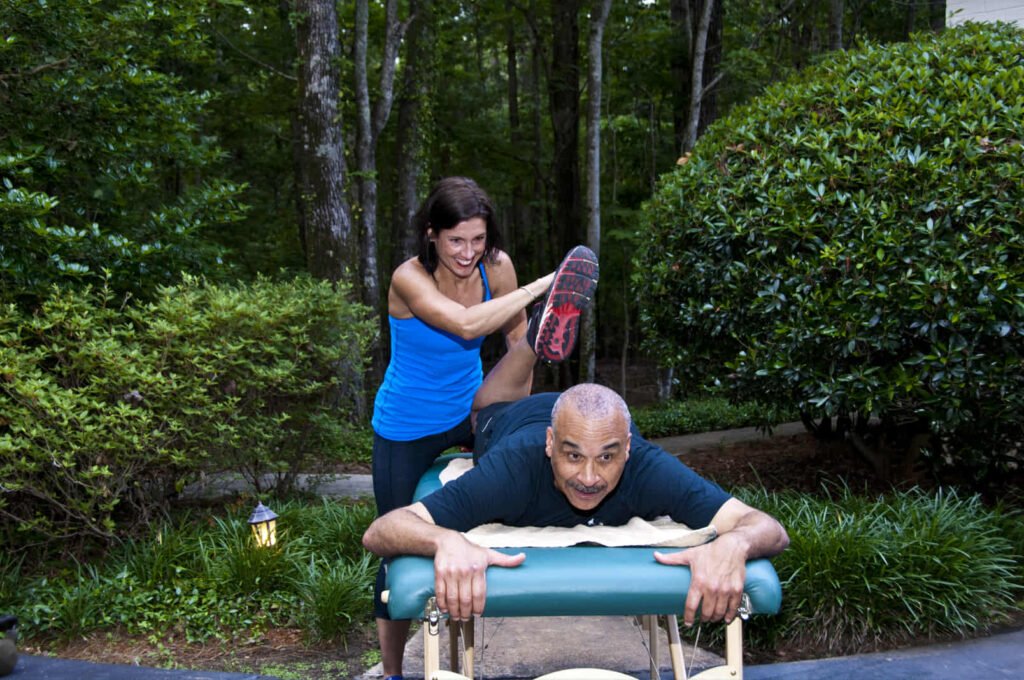
The change: Tightness of the hamstrings, quads, chest and lower back are a result of too much sitting.
The solution: Form a new habit by standing up each hour and stretching at the workstation. One way to accomplish this would be to go talk to a co-worker versus sending an email.
30's
The change: A reduction in aerobic capacity which is measured by V02 max, the maximum rate of oxygen consumption measured during incremental exercise.
The solution: Engage in H.I.I.T training (High-Intensity interval training) or SIT (Sprint interval training) by alternating short bursts of intense anaerobic exercise with less intense recovery until exhaustion. The time and intensity will vary depending upon each person’s current level of cardiovascular fitness. There is no universal time frame with starting one of these programs; however, the average time is 20-30 minutes consisting of the following exercises: Burpees, jumping jacks, running in place, push-ups for the chest, tricep dips and varying degrees of a plank are just to name few.
To determine longitudinal rate of change in aerobic capacity and the influence of age, gender, and physical activity on these changes, we performed serial measurements of peak treadmill oxygen consumption (peak V̇o2) in 375 women and 435 men ages 21 to 87 years from the Baltimore Longitudinal Study of Aging, a community-dwelling cohort free of clinical heart disease, over a median follow-up period of 7.9 years. A linear mixed-effects regression model was used to calculate the predicted longitudinal 10-year rate of change in peak V̇o2, expressed in milliliters per minute, for each age decade from the 20s through the 70s after adjustment for self-reported leisure-time physical activity. A longitudinal decline in peak V̇o2 was observed in each of the 6 age decades in both sexes; however, the rate of decline accelerated from 3% to 6% per 10 years in the 20s and 30s to >20% per 10 years in the 70s and beyond. The rate of decline for each decade was larger in men than in women from the 40s onward.
40's
The change: Loss of muscle mass and strength
The solution: Strength training 2-3 times a week using multi-joint exercises, such as a stiff legged deadlift for the hamstrings and lower back, a goblet squat for overall leg strength and rows for back and shoulders.
By doing these exercises, your posture will improve and you will gain overall strength. Compound exercises like these give you the biggest gain for growth because multiple muscles are being used with each movement.
50's
The change: Testosterone levels decline causing a reduced libido, lack of energy and an increase in body fat.
The solution: You can reduce body fat by switching from long, steady state cardio to circuits of short, alternating intervals with bouts of high-intensity work followed by rest.
An abstract found in Metabolism journal substantiates these findings when comparing the impacts of exercise intensity on body fat and skeletal muscle metabolism.
Tremblay A, Simoneau JA, Bouchard C et.al. states,”The impact of two different modes of training on body fatness and skeletal muscle metabolism was investigated in young adults who were subjected to either a 20-week endurance-training (ET) program (eight men and nine women) or a 15-week high-intensity intermittent-training (HIIT) program (five men and five women). The mean estimated total energy cost of the ET program was 120.4 MJ, whereas the corresponding value for the HIIT program was 57.9 MJ. Despite its lower energy cost, the HIIT program induced a more pronounced reduction in subcutaneous adiposity compared to the ET program.
60's
The changes: Lack of balance, mobility, and flexibility.
The solutions: Exercises that challenge your balance and flexibility include the following: a wobble board, a Bosu ball and standing on one leg while doing a bicep curl or a lateral raise are ways to do just that.